High Efficiency Washer vs Regular: What Changes (October 2026)
High-efficiency washers use less water and need HE detergent; regular washers typically use more water per load. The right choice depends on the washer’s cleaning design, your laundry habits and the care instructions.
On this page (7 sections)
High-efficiency washers use less water and require HE detergent; regular washers typically use more water per load. In a high efficiency washer vs regular comparison, look at wash action, detergent, cycle choices and the space you have.
“Regular” often means a traditional top-load washer that fills with more water. It does not describe one fixed design, so check the individual model’s instructions and features before buying.
The products here are all high-efficiency models, with front-load and top-load options. They show how HE features can vary across washer styles.
 Best for large front-load loads
LG WM4200HWA 5.0 Cu Ft Front Load Washer
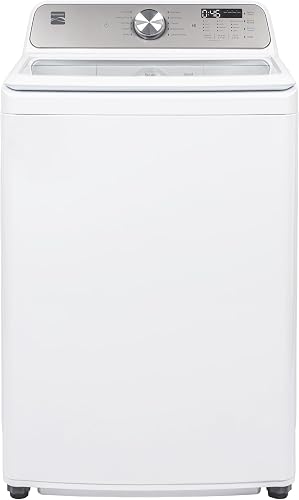 Best for top-load stain routines
Kenmore 4.1 Cu Ft Top Load Washer with Agitator
High efficiency washer vs regular: what is the main difference?
Water use and detergent are the clearest differences: HE washers are designed for lower water use and HE detergent. A regular washer may fill more of its tub for a wash, depending on its design and settings.
HE washers often use wash action that moves clothes through a smaller amount of water. A front loader tumbles laundry through the wash, while a top loader may use an impeller or an agitator.
Traditional top-load models generally use an agitator and more water. That can change how the load moves, but it does not mean every traditional washer or every HE machine works exactly the same way.
Check the manual for the recommended detergent type and amount. Don't assume that a top-load washer is regular or that every high-efficiency washer is a front loader.
What does “he washer vs regular” mean?
The phrase usually compares high-efficiency washers with traditional washers. The letters “HE” stand for high efficiency, and an HE label on a washer or detergent signals compatibility with that type of machine.
The distinction is about how a washer uses water and detergent, not simply whether it loads from the top or front. For a side-by-side look at those opening styles, see our guide to top-load vs front-load washers.
How does detergent use change?
Use HE detergent in an HE washer and follow its manual for the right amount. HE detergent is made to work with lower-water wash systems and produce less suds than regular detergent.
Too much detergent can leave residue or make rinsing harder. Don't add extra just because a load looks large; use the washer’s guidance and the detergent label.
Traditional washers may allow regular detergent, but follow the specific manual. If you switch to an HE machine, make sure your detergent is labeled for HE use.
How do the washer styles clean clothes?
Wash action varies by model: front loaders tumble clothes, while top loaders can use an agitator or impeller. The choice affects how clothes move in the tub and how much room remains for laundry.
An agitator is a post in the center of some top-load tubs. An impeller sits lower in the tub and moves clothes with a low-profile wash plate or similar mechanism.
An HE top loader can still have an agitator. The Kenmore 4.1 Cu Ft Top Load Washer uses a Triple Action Agitator, while the Midea 4.1 Cu Ft Top Load Washer has a Power Wave Agitator and automatic water-level sensing.
If you’re choosing between those two top-load mechanisms, read how agitator and impeller washers differ. The better fit depends on the loads and wash action you want.
Which type suits your laundry routine?
Choose an HE washer if lower water use and HE detergent fit your routine; consider a traditional washer if you prefer its wash style and accept its water use. Your fabric types, load size and available space also matter.
When does a front-load HE washer make sense?
A front loader may suit you if you want a front-opening washer with a large capacity. The LG WM4200HWA has 5.0 cu ft of capacity, ENERGY STAR certification and SmartThinQ Wi-Fi for remote cycle controls and notifications.
Its listed door-open depth is 53.25 inches, so account for that when planning the laundry space. If you want a closer look at the style, see our front-load washer guide.
Front loaders may require bending to load and unload. Check that the door can open fully and that the controls and loading height work for you.
When does an HE top loader make sense?
An HE top loader suits you if you prefer loading from above. The Kenmore offers a Triple Action Agitator, 10 wash cycles and Express Wash for small loads; the Midea offers 8 cycles, automatic water-level sensing and 4 temperature settings.
Both have 4.1 cu ft capacity. The Kenmore also has Accela Wash for full-size loads, while the Midea’s selectable water levels let you adjust the setting as needed.
A top-load opening needs overhead space, and an agitator occupies part of the tub. Compare cycle options and how you load laundry before deciding.
What should you compare before buying?
Compare the exact model’s capacity, wash action, detergent directions and energy information. The HE label alone won't tell you whether a washer fits your household or laundry room.
Start with capacity. A larger drum can make bulky loads easier to fit.
Choose a size based on typical loads rather than an occasional oversized item. Our washing machine size guide can help you estimate what fits your household.
Next, check the cycle list and controls. Short cycles can help with lightly soiled loads, while dedicated settings may be useful for bedding, delicates or heavy soil.
Measure the washer space, including door swing, overhead clearance and the path from delivery entrance to laundry room. The LG’s maximum depth with its door open is 53.25 inches, so include that space in your plan.
Also compare annual energy figures and certifications when available. The LG is ENERGY STAR certified and has a listed annual energy consumption of 105 kWh; comparable figures for the two top loaders aren't included here.
Does an HE washer need special care?
An HE washer needs the detergent and care steps in its manual. Correct detergent use and routine cleaning help avoid residue and odors.
Use the recommended amount of HE detergent for the load. Don't overload the drum, since clothes need room to move through the wash action.
Clean the drum, dispenser and door seal as the manual directs. For a front loader, see our guide on cleaning a washing machine rubber seal.
Which washer should you choose?
Pick an HE washer if you want lower water use and are ready to use HE detergent; choose a traditional model if its wash style and operating directions suit you better. Then compare capacity, cycles and fit for the exact machine.
For a roomy front loader, the LG offers 5.0 cu ft capacity and ENERGY STAR certification. For a top-load agitator, the Kenmore and Midea each provide 4.1 cu ft, with different cycle and water-level features.
Explore more options in our full-size washer guide, then match the model to your laundry routine and available space.
Frequently asked questions
What does high efficiency mean on a washer?
A high-efficiency washer is designed to use less water than a traditional washer and requires HE detergent. Many HE models use low-water wash action, though designs vary: front loaders tumble clothes, while top loaders may use an impeller or an agitator.
Check the model’s manual for detergent and loading directions.
Can you use regular detergent in an HE washer?
Use detergent labeled for HE washers in an HE model. Regular detergent can create more suds than a low-water washer is designed to handle, which may affect rinsing and operation.
Follow the detergent amount and product guidance in your washer manual, since load size and soil level can change what you need.
Do high-efficiency washers clean as well as regular washers?
Both types can clean everyday laundry when you choose the right cycle, detergent and load size. Cleaning depends on the washer’s design and settings, not just its water use.
Compare cycle options and wash action for your needs, and follow care labels for delicate fabrics or heavily soiled items.
Does an HE washer always use less energy?
An HE design can use less water, and some models also have energy-saving certifications, but efficiency varies by model. Compare the exact washer’s annual energy figure and certification instead of assuming all HE machines use the same amount.
Your cycle choices and laundry habits also affect total household use.
Which is better, an HE top loader or front loader?
Choose by access, space and wash action. A front loader may suit you if you want a door at the front and a large capacity, while a top loader keeps loading at waist height but needs room above.
Compare top-load and front-load washer differences before choosing.


