How Much Space Between a Washer and Dryer?
Leave about 1 inch between side-by-side machines, unless the manuals call for more. Allow extra room behind them for hoses, vents, and connections, and check door and lid clearance before you install.
On this page (8 sections)
- How much space between a washer and dryer is enough?
- How much room should you leave behind the machines?
- How do doors and lids change the space you need?
- Does a top-load washer need extra room above it?
- Can you stack a washer and dryer to save floor space?
- How do you measure a laundry space before buying?
- What should you check after installation?
- How much space between a washer and dryer should you plan?
Leave about 1 inch between a side-by-side washer and dryer as a starting point, unless either manual calls for more. Behind the machines, allow space for hoses, power cords, and the dryer vent, and check that doors and lids can open fully.
The right fit depends on the appliances and the room. Measure the units and the available area, then account for hookups, doors, and the way you need to reach the machines.
How much space between a washer and dryer is enough?
About 1 inch between side-by-side machines is a practical starting point. Follow the clearance instructions for your exact washer and dryer if they require more.
A small gap helps keep the cabinets from pressing against each other if the washer shifts during a spin. It also leaves room to clean the sides and reach the space between units.
Don't assume every machine needs the same clearance. Compare dimensions and installation guidance before choosing a pair, as explained in our guide to choosing a washing machine for your home.
How much room should you leave behind the machines?
Measure the space needed for hoses, cords, and the dryer vent before pushing appliances into place. Connections need room to sit without being crushed or sharply bent.
The right depth varies by appliance and hookup. Check both manuals and measure from the wall to the point where the machine will sit, including any connection that extends behind it.
A 90-degree elbow can help a washer sit closer to the wall when the hose and hookup allow it. The Beaquicy set includes 6 ft washer hoses with 90-degree elbows.
Don't use a hose length or elbow to force a machine against the wall. Keep connections accessible and follow the washer's installation instructions.
How do doors and lids change the space you need?
Leave enough open floor space for the washer door, dryer door, or top-load lid to open without hitting a wall or cabinet. Check the path for carrying laundry, too.
Front-load doors swing out into the room, so measure their full open position. A top-load washer needs overhead room for the lid and clearance above the machine for loading.
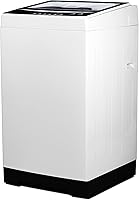
The CONTOURE 24 in front-load washer has a stated depth of 25.2 inches and a maximum depth of 42.5 inches with its door open. Its dimensions are 34.5 inches deep by 28 inches wide by 26.5 inches high, so use the open-door measurement when checking the aisle.
For a smaller laundry area, compare options in our guide to compact washers for tight spaces. Measure the full opening and the route into the room, not just the appliance footprint.
Does a top-load washer need extra room above it?
Yes, a top-load washer needs space for the lid to open and for you to reach into the drum. Check the lid's path against shelves, counters, and cabinets.
A top-load washer may fit within the floor area but still be hard to use under a low shelf. Measure the height from the floor to the lowest obstruction and compare it with the washer's height and lid movement.
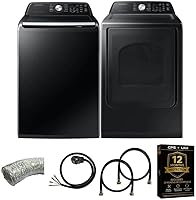
The Samsung set includes a 4.7 cu ft top-load washer and a 7.4 cu ft electric dryer. Plan around the washer's lid and the dryer's door before deciding where each unit will go.
Can you stack a washer and dryer to save floor space?
Stacking can reduce the floor width a washer and dryer need, but the appliances must be compatible and secured as their manuals direct. Measure the stacked height, depth, and nearby ceiling or shelves.
The Kiss Core stacking kit is adjustable for washers and dryers from 24 to 29 inches, with a maximum stated size of 29 by 29 inches. Check your appliances' dimensions and the kit's fit range before choosing it.
A kit's stated fit range doesn't confirm that it suits every appliance model. Check both manuals and the kit's installation guidance, and don't stack machines unless the appliance makers allow that setup.
For a lower appliance position or added storage, see our guide to washer and dryer pedestals. Pedestals change the working height, so include them in your height and clearance measurements.
How do you measure a laundry space before buying?
Measure width, depth, and height, then mark the door and lid paths. Include baseboards, trim, cabinets, and any connections that take up room.
Use these steps:
- Measure the opening at the narrowest point.
- Measure from the back wall to the front edge of the available space.
- Check the height under shelves or cabinets.
- Add the appliance dimensions and connection space from the manuals.
- Confirm doors, lids, and the route into the room can open and pass freely.
If two machines will sit side by side, include the gap between them in the total width. For a matched pair, our washer and dryer set guide can help you compare options, but still verify the dimensions of the specific machines.
What should you check after installation?
Confirm the machines sit level, the connections aren't pinched, and each door or lid opens freely. Run a cycle according to the manuals and watch for movement or contact between the cabinets.
If a washer shakes or shifts, stop and check its installation and leveling instructions. Our guide to leveling a washing machine explains the basic process.
A crowded fit can make hookups harder to reach and leave no room to clean or service the appliances. If the room won't fit the pair with the needed clearances, consider a compact machine, a different layout, or a compatible stacked setup.
How much space between a washer and dryer should you plan?
For a side-by-side pair, start with about 1 inch between the machines, then follow their manuals and allow for connections, door swings, and lid clearance. For a stacked pair, check compatibility and the required securing method.
Measure the room and appliances together before buying. If width is the main limit, compare compact options; if a top-load lid or front-load door is the obstacle, choose a layout that leaves its full opening path clear.
Frequently asked questions
How much space should be between a washer and dryer?
For side-by-side machines, leave about 1 inch between them as a starting point, then follow each manual's clearance requirements. Check the space needed for hoses, vents, cords, and movement during a spin cycle.
Leave enough room for doors and lids to open fully.
Can a washer and dryer touch each other?
Avoid installing side-by-side machines so they press against each other. A small gap helps prevent contact as the washer moves during a cycle and gives you room to clean between them.
Use the clearance in both appliance manuals if it calls for more space.
How much room should I leave behind a washer and dryer?
Leave enough depth for the appliance connections and any dryer vent, without sharply bending or crushing them. The needed space depends on the machine and connection layout, so check the manuals and measure from the wall to the front of the installed units.
Do stackable washers and dryers need space between them?
A stacked pair doesn't need a side-to-side gap between the washer and dryer, but it does need a compatible stacking method and the clearances each manual specifies. Measure the full height and depth, including connections, and confirm the upper appliance can be secured as directed.