How to Connect a Washing Machine to a Sink
To connect a washing machine to a sink, screw a faucet adapter onto the tap, attach the inlet hose to the adapter, and hook the drain hose over the basin edge or into the drain. Run a short test fill and check every joint for drips before you wash a full load.
On this page (9 sections)
- What parts do you need to hook a washer to a sink?
- How do you attach the faucet adapter to the sink tap?
- How do you connect the inlet hose to the faucet and the washer?
- How do you set up the drain hose at the sink?
- Which portable washer makes a sink hookup easiest?
- How do you run a first test and check for leaks?
- What mistakes cause leaks or water damage?
- How do you make the sink hookup safe for daily use?
- Which setup fits your sink and space?
To connect a washing machine to a sink, fit a faucet adapter to the tap, screw the inlet hose onto the adapter, and set the drain hose so it empties into the basin or the sink drain. Run a short fill with no clothes and watch every joint for drips.
The job takes about 15 minutes and needs no plumbing work. A portable washer with a quick-connect sink adapter makes it simpler still, because the fittings are matched to the hose in the box.
What parts do you need to hook a washer to a sink?
You need a faucet adapter, an inlet hose, a drain hose and a hose clip or hook. Most portable washers ship with some of these, so check the box before buying extras.
The adapter screws onto the threaded end of your faucet and gives the inlet hose something to lock onto. Some are brass with a standard 3/4 inch thread; others are rubber with a clamp band for smooth spouts.
A short drain hose that reaches the basin is enough, but you may need a longer one if the machine sits on the floor beside a tall sink. A clip or hook holds the drain end in place.
Without it, the hose can slip out mid-cycle and soak the floor.
How do you attach the faucet adapter to the sink tap?
Unscrew the aerator from the tap, then screw the adapter on in its place. Hand-tighten only, and stop if the adapter cross-threads.
Remove the small screen piece at the end of the faucet. Most unscrew by hand; pliers wrapped in cloth help on stiff ones.
Keep the aerator in a drawer so you can put it back when the washer isn't connected.
Check the adapter against the tap thread before you turn it. If it starts crooked, back it off and try again, because a cross-threaded adapter will leak no matter how tight you make it.
For a smooth or irregular spout with no usable thread, use a rubber universal adapter. Slide it over the end and tighten the clamp band with a screwdriver.
Pull-down kitchen sprayers and other non-standard faucets often don't accept an adapter well. Use a different tap in that case, such as a utility sink or a bathroom basin with a threaded spout.
How do you connect the inlet hose to the faucet and the washer?
Screw one end of the inlet hose onto the faucet adapter and the other end onto the washer's water inlet. Both ends are hand-tightened; check the rubber washers are seated first.
Look inside each hose nut. A rubber or nylon washer sits there to seal the joint.
If one is missing or cracked, the connection will weep. Replacement washers cost very little and solve most small leaks.
Turn the nut clockwise until it feels snug, then stop. Over-tightening crushes the washer and can split the fitting.
If the nut has a quick-connect collar, push it on until it clicks and pull gently to confirm it's locked.
Route the hose so it doesn't kink behind the machine or loop tightly around a corner. Leave a gentle curve and keep the hose off hot surfaces.
Some portable washers fill from a single cold tap and heat the water internally; others have separate hot and cold inlets. Match the hose to the inlet your machine has.
Which inlet hose should you pick?
The right hose depends on the gap between the sink and the washer. A short run needs a compact hose; a longer run needs more length so the hose doesn't pull tight.
The K&J pair measures 72 inches each. The braided stainless steel sheath is built to resist pressure, and the rubber washers form the seal at each end.
Either hose works as hot or cold, so there's no wrong way round to fit them. Pick this pair when the machine sits a few feet from the tap and you want spare length.
The Yejesiy set comes as one red hot hose and one blue cold hose, each 4 feet long. The brass nuts resist corrosion, the rubber gaskets seal the joints, and the 10-year warranty covers the hoses.
This set suits a washer placed right beside the sink.
How do you set up the drain hose at the sink?
Hook the drain hose over the edge of the basin or push it into the sink drain, and keep the end above the water line. Gravity does the rest; there's no pump to prime.
Most portable washers come with a plastic U-clip or hook that holds the hose on the basin rim. Clip it on so the hose end hangs just inside the bowl.
If your machine didn't include one, a large spring clamp or a cable tie around the faucet works.
Keep the hose end higher than the water level in the sink. If it sits under water, dirty water can siphon back into the drum.
A loop of hose taped to the wall above the basin prevents that.
Don't push the hose deep into a drain with a tight seal. The water needs air behind it to flow away, and a sealed pipe can back up.
Let the hose end sit loose in the drain opening, and check the path before every wash.
Which portable washer makes a sink hookup easiest?
A portable washer with a quick-connect sink adapter is the simplest option, because the fill and drain fittings match the sink tap out of the box. Look for one with a drain hose included.
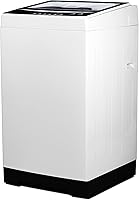
The BLACK+DECKER BPW30MW fills from a sink tap and drains into the basin, and the adapter and drain hose come with it. The stainless steel tub resists rust, and the 6 cycles cover normal, heavy, delicate, quick, bulky and spin-only loads.
Three water levels handle small, medium and large loads up to 26.5 lb.
At 99.2 lb with two roller wheels and side handles, it moves from the sink to a closet between wash days. Auto unbalance detection and auto shutoff add a layer of safety, and the child lock helps in homes with small children.
The trade-off is size: at 23.7 x 24.8 x 39.4 inches it takes real floor space, so measure the spot beside the sink before you buy. If your space is tighter, compare washing machines for apartments with a smaller footprint.
How do you run a first test and check for leaks?
Fill the drum with no clothes and watch each joint for two or three minutes. A dry joint after a full fill is a good sign the hookup is sound.
Start with a small load setting so you don't waste water. Turn the tap fully on and let the machine fill.
Watch the faucet adapter first, since that's the most common leak point, then the hose nut at the washer inlet.
Wipe each joint with a dry tissue. A damp patch means a slow weep.
Tighten the nut a quarter turn and try again. If it still drips, the washer is probably worn or missing.
Let the machine drain into the sink and check the drain hose stays put. Check the joints again after the first full wash, because vibration can loosen a fitting that seemed tight.
What mistakes cause leaks or water damage?
The most common mistakes are over-tightening fittings, leaving the drain hose unsecured, and using a tap that can't take the adapter. Each one is easy to avoid.
Over-tightening crushes washers and cracks plastic adapters. Hand-tight plus a small extra turn is enough.
An unsecured drain hose is the biggest risk to your floor: clip it, tie it or clamp it every time.
A pull-down or non-standard faucet often won't hold an adapter. Check the fit before you buy the adapter.
And leaving the supply connected for days puts constant pressure on the hose and joints. For a temporary hookup, shut the tap off and disconnect the hose after each wash day, which also keeps the sink free for normal use.
How do you make the sink hookup safe for daily use?
Fit a proper diverter valve or a dedicated washer tap if you plan to wash every day. A quick-connect adapter is fine for occasional use, but daily hookups loosen over time.
A diverter valve splits the faucet supply so the washer line stays connected and the tap still works. It's a small plumbing job, or a plumber can fit it in under an hour.
That removes the repeated connect and disconnect that wears adapters and washers.
Use burst-proof hoses either way. A reinforced stainless steel hose costs little more than a rubber one and holds up better under pressure.
Keep the washer level on its adjustable leg so it doesn't walk across the floor during the spin; a level machine also puts less strain on the hose connections.
When the job is done, coil the hoses loosely rather than crushing them in a drawer, and store the adapter with the hoses so the next hookup is quick. For help picking a machine that suits your sink and space, see how to choose a washing machine and what size washing machine do I need.
If your water is hard, a machine with a good rinse cycle matters more than the hookup itself. Our guide to which washing machine is best for hard water covers what to look for.
Which setup fits your sink and space?
Pick a portable washer with a quick-connect sink adapter if you want the easiest hookup and the machine can sit beside the tap. Add a burst-proof inlet hose so the supply line holds up to repeated connects.
Choose the BLACK+DECKER BPW30MW when you have floor space near the sink and want the fill and drain fittings included. Choose the K&J 6 ft hoses for a longer run from tap to machine, or the Yejesiy 4 ft pair for a short, tidy run right beside the basin.
If you'll be washing most days, fit a diverter valve rather than relying on a screw-on adapter. If the hookup is only now and then, a quick-connect adapter and a well-clipped drain hose handle the job safely.
Either way, the test fill is the step that tells you whether the connection is sound.
Frequently asked questions
Can I connect a washing machine to a kitchen faucet permanently?
A temporary hookup with a quick-connect adapter is fine for occasional use. For daily washing, fit a proper diverter valve or a dedicated washer tap so the supply line stays put and the sink stays usable.
Keep the adapter and hoses where you can reach them for checks.
How do I stop the drain hose from falling out of the sink?
Use the U-shaped hose clip or hook that ships with most portable washers, and rest the hose over the basin rim. A cable tie around the faucet works too.
Keep the end above the water level in the sink so dirty water can't siphon back into the machine.
Does a portable washer need hot and cold taps?
No. Most compact models fill from a single tap and heat the water inside the drum.
Connect the inlet hose to the cold tap and choose the wash temperature on the control panel.
A machine with separate hot and cold inlets needs both taps.
What do I do if the sink faucet thread doesn't match the adapter?
Faucet threads come in a few common sizes, so the adapter that fits one tap may not fit another. A universal rubber adapter with a clamp band handles most round spouts.
Otherwise, match the thread on your tap to the adapter you buy.
How often should I check the hoses and connections?
Look at the joints before each wash day and replace any hose that feels soft, bulges, or shows cracks. A burst inlet hose can send water across the floor in minutes.
Burst-proof stainless steel hoses cost little and remove most of that risk.